Wildfire is a public place for Chicagoans who notice the same problem and want to do more than start over alone. It helps neighbors find one another, turn concern into action, and keep the answer—or silence—on the record.
Summary
Wildfire is civic infrastructure. Wildfire allows you to take civic action while removing the friction. Wildfire lets you take back control.
Sergio Patiño wrote this summary.
There’s a railroad bridge over 36th and Campbell that I’ve started noticing.
Not because it’s new. It’s old enough that most people who pass under it stopped looking up a long time ago. Trains go over it. People go under it. It’s part of the city’s furniture: useful, permanent, easy to ignore.
Then one day I looked up and saw concrete missing from the underside. I took a picture and started wondering the things you wonder in that moment. Has anyone else seen this? Is someone supposed to know? Has anyone already asked?
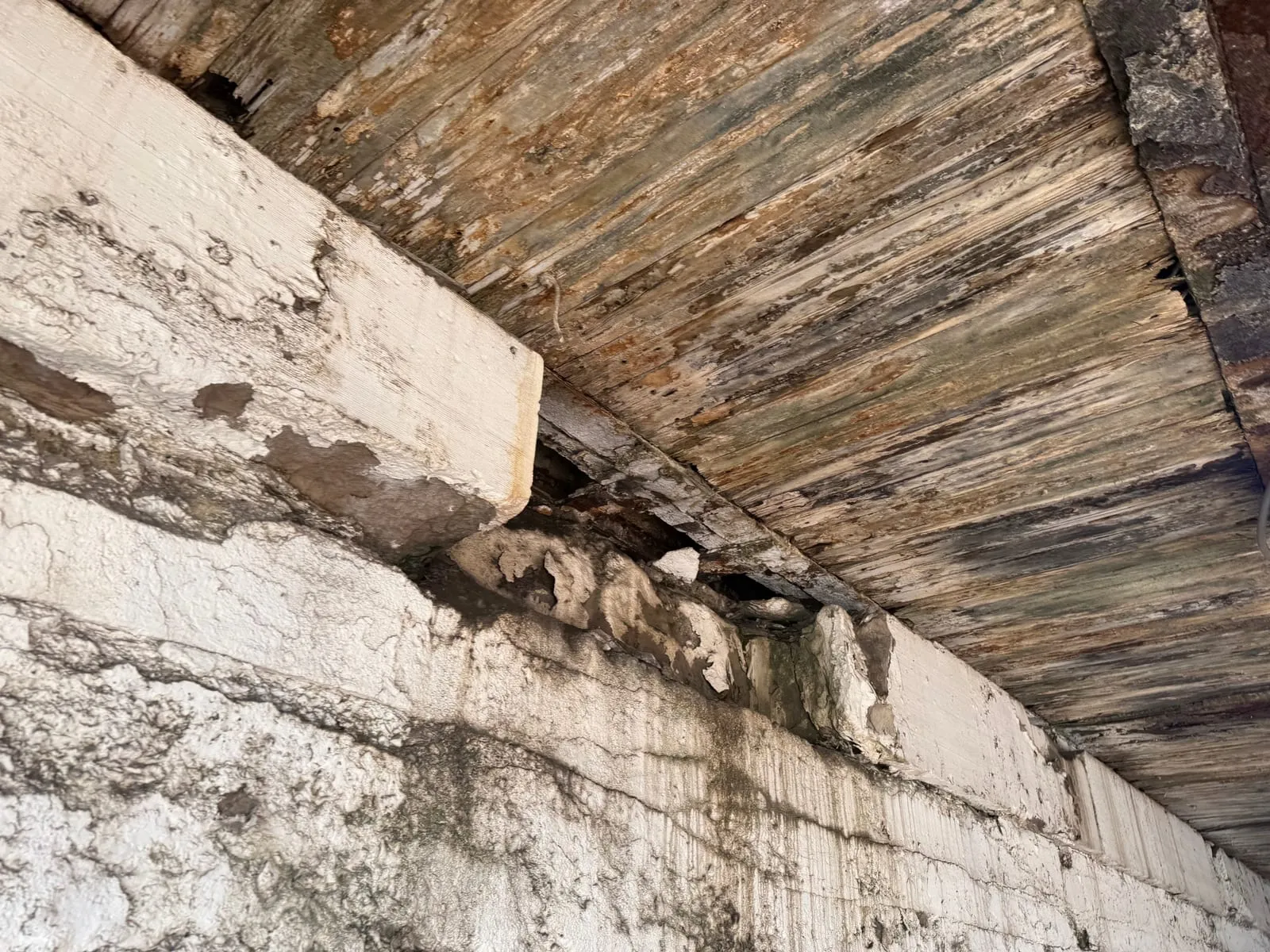
I’m almost certainly not the first person to notice. Plenty of people pass under that bridge every day, and some of them have looked up too. A few probably called someone.
But I have no way of knowing that. And the next person who notices won’t know about me.
That’s the part that stays with me.
It isn’t that there’s nowhere to go. There’s always a phone number. There’s usually a meeting. The problem is what happens after. Each person who decides to do something does it alone, and when they go home, their question often goes with them.
One neighbor calls 311 and gets a ticket number. That one was me. Another emails the ward office. A third gets two minutes at the microphone during a community meeting. A fourth posts a photo in a neighborhood Facebook group, where it collects a few comments and scrolls away.
That’s four people worried about the same bridge. None of them knows about the others. And on the receiving end, it doesn’t look like four neighbors asking one question. It looks like four small, unrelated things, each easy to close, file, or forget.
This is the pattern that bothers me most. Not because people don’t care, but because they do.
Chicago is full of people who care about the places where they live. They notice the flooded alley, the dangerous intersection, the abandoned lot, the broken streetlight, and the bridge that doesn’t look right. Noticing isn’t the hard part. The hard part is finding out you aren’t the only one.
What wears people down is the distance between seeing a problem and believing anything will come of it.
Most people don’t say, “I don’t care.”
They say, “What’s the point?”
I work in market research. In my world, one comment is an anecdote. Forty people saying the same thing becomes impossible to ignore. But that only works if someone keeps the comments together, where they can be counted, compared, and understood as part of the same story.
Chicago’s neighborhoods rarely get that opportunity.
The city keeps records of nearly everything. But those records are organized around the city’s work: tickets, cases, departments.
What’s harder to find is a record of the neighborhood itself. What did people notice? How many cared enough to speak up? What did they ask for, and who did they ask? What happened next?
And one thing almost never shows up: the question nobody answered.
When an email goes unanswered, the only proof usually sits in one person’s inbox. When a phone call goes nowhere, the record often ends with the caller. Silence leaves almost no public trace. Everyone who asked is left to wonder whether they were ignored, whether someone else got an answer, or whether anyone will ever know the difference.
The Work We Shouldn’t Have to Repeat
Chicago has already solved versions of this problem.
Before it was even a city, an early map carried a promise: part of the lakefront would remain “forever open, clear and free.” Decades later, Montgomery Ward relied on those words in a twenty-year legal fight to keep it open.1 Because the promise had been written down, he had something to stand on. That legacy helped protect what Chicago now knows as Grant Park.1The 1836 plat by the Illinois and Michigan Canal commissioners. Ward first sued in 1890 and won four times in the Illinois Supreme Court, the first City of Chicago v. Ward, 169 Ill. 392 (1897), the last in 1910.
In 1999, the city replaced a tangle of phone numbers with three digits: 311. Residents no longer had to know which department did what.22The City of Chicago’s 311 history page: “In January 1999, the City implemented the 311 system as a ‘one-stop-shopping’ center for access to all city services and non-emergency police services, eliminating a number of smaller call centers.”
Different problems, same principle: somebody does the hard work once so everyone after them doesn’t have to.
That’s what good infrastructure does. It makes something difficult easier, then becomes so ordinary that people forget it was ever difficult in the first place.
311 answered the first question a resident has: Who do I call?
Wildfire is built around the question that comes next: Who else is asking?
It begins with something simple, like a photo of a bridge. One neighbor leaves it where others can find it. The next person sees it and realizes they weren’t the only one who noticed. Another adds what they know. Someone who has been meaning to speak up finally does.
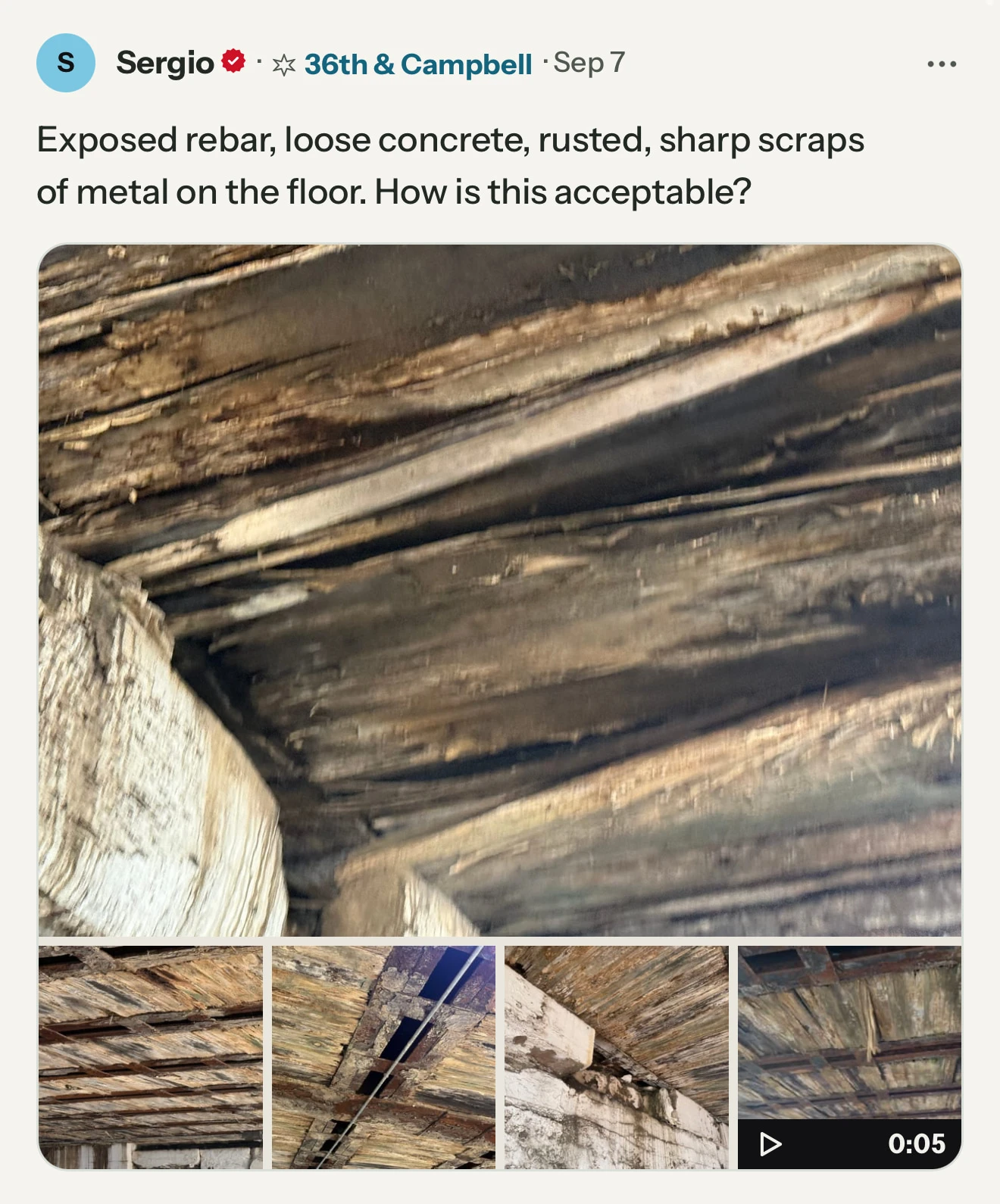
Nobody has to know anybody. They just have to find the same concern.
Instead of four neighbors on four separate paths, they can decide together what to ask for. Wildfire helps them turn that ask into a public petition and deliver it to the office that can act on it. The petition is dated, and anyone can see how many neighbors are behind it.
If an answer comes, it appears right beside the question. If none comes, that silence leaves a trace too.
The record isn’t there to pick a fight or to decide who’s right. It’s there because people deserve to know what happened after they cared enough to ask.
Wildfire can’t fix the bridge. It can’t tell a railroad, a city department, or an alderperson what decision to make. It can’t replace expertise with popularity, and it can’t guarantee that every problem will be solved.
What it can do is help people who care about the same place find one another, ask together, and see what happens next.
I built Wildfire because I got tired of watching local problems outlast the people who raised them. It’s public, nonpartisan, and built to last. No ads. No party money. No endorsements. Wildfire doesn’t sell anyone’s information, and nothing on it is designed to keep people angry.
The point is simple: make caring easier to act on and action easier to see.
The Next Person
Wildfire starts in January in McKinley Park, Bridgeport, and Pilsen, in English, Spanish, and Chinese. It starts small on purpose, because the idea has to prove itself in the everyday life of a neighborhood.
Before it launches, I want to answer one question:
How many Chicagoans believe neighbors deserve to know how many asked the city to fix the same problem, and what came of it?
I keep thinking about the next person who will stand under that railroad bridge and look up. They’ll wonder what I wondered. Has anyone else seen this? Is someone supposed to know? Has anyone already asked?
They should be able to see that they aren’t the first. Someone noticed before them. Someone asked. Other neighbors cared. Maybe an answer came. Maybe someone in charge explained what had already been inspected, or what would happen next. Maybe everyone is still waiting.
Whatever happened, the story shouldn’t have to begin again.
If you believe neighbors deserve to know how many asked, and what came of it, I hope you’ll be one of the first to add your name.
Footnotes
-
The 1836 plat by the Illinois and Michigan Canal commissioners. Ward first sued in 1890 and won four times in the Illinois Supreme Court, the first City of Chicago v. Ward, 169 Ill. 392 (1897), the last in 1910. ↩
-
The City of Chicago’s 311 history page: “In January 1999, the City implemented the 311 system as a ‘one-stop-shopping’ center for access to all city services and non-emergency police services, eliminating a number of smaller call centers.” ↩
English
Petition
How many Chicagoans believe neighbors deserve to know how many asked the city to fix the same problem, and what came of it?
Read the essay: Noticing Isn’t the Hard Part
Wildfire is a public place for Chicagoans who notice the same problem and want to do more than start over alone. It helps neighbors find one another, turn concern into action, and keep the answer—or silence—on the record.
I believe neighbors deserve to know how many asked the city to fix the same problem, and what came of it.
You’ve signed. I’ll text you when the count passes 100, 500 and 1,000, and once when Wildfire opens in January, with a link to join. No other texts.